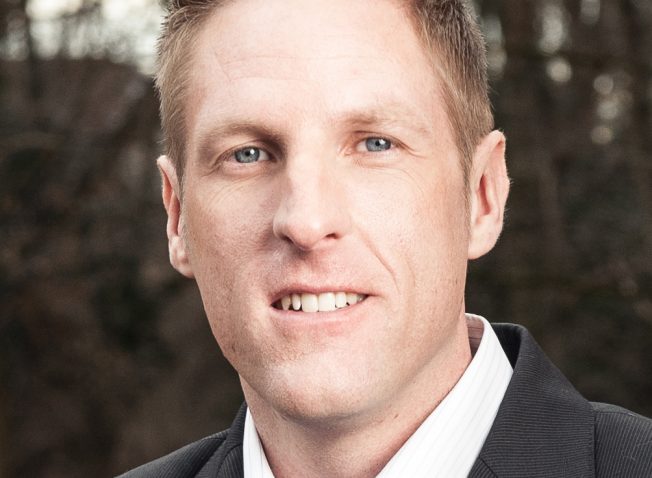
Until recently, he was still acting as an influencer, but now he has become one himself: in December, content expert Markus Kellermann joined the Content Marketing Club. Interview pro Philipp Schütte took the opportunity to ask the Augsburg-based agency boss about the hot topic of influencer marketing, uncovering some exciting key figures in the process. It's a conversation we don't want to keep from you, of course...
{{divider}}
The beginnings...
Philipp:
You contributed a chapter on affiliate marketing to "Der Online Marketing Manager – Handbuch für die Praxis" (The Online Marketing Manager – A Practical Handbook), and judging by your LinkedIn posts, you obviously also have a passion for content marketing and influencer marketing. How did you get into online marketing, and what is your main focus now?
Markus:
That's two questions at once. I first got into online marketing in the mid-90s during my training. At that time, I was responsible for the intranet and internet at the company and had my first contact with search engine optimization for Fireball and Altavista while building the website, and then of course with Google in the early 2000s.
I worked intensively with SEO for almost 10 years and, in 2001, founded the first SEO round table in Munich together with Thomas Bindl. Also in 2001, I came into contact with affiliate marketing for the first time and set up the first affiliate programs for Erwin Müller Versandhaus GmbH's online shops. I then spent seven years at explido>iProspect, where I was responsible for setting up the affiliate department, and I have been self-employed since 2012.
Philipp:
And as an early adopter of SEO, what is your opinion on content marketing?
Markus:
Since 2014, I have been the managing director and partner of xpose360 GmbH in Augsburg. We specialize in SEO, PPC, affiliate marketing, and influencer marketing, and naturally also in content marketing.
My colleagues Tina and Lydia have just published published a great book . It's about the path to perfect content – from strategy to distribution.
{{divider}}
More advertising than content?
Philipp:
What should I understand by influencer marketing? Does this only include the casual promotion of a product, or is there much more to it than that?
Markus:
Influencer marketing has been a hot topic since at least 2017. Demand and interest in authentic influencers is high and continues to rise. The recently published Goldmedia study took an in-depth look at the development of influencer marketing and calculated its revenue in the DACH region for the first time...
In 2017, the 30,000 German-speaking digital opinion leaders already generated net revenues of €560 million. The results show that the market for influencer marketing is growing by around 20% per year. By 2020, it will have developed into a billion-euro market with revenues of €990 million.
The largest source of revenue for influencers is directly remunerated "sponsored posts." However, there is also the option of giving influencers a share of the revenue generated through affiliate marketing or providing them with free products.
By far the most relevant social media platforms for presenting sponsored posts in the form of photos, videos, or stories in 2017 were Instagram, YouTube, and Facebook. More than three-quarters of revenue was generated on these three channels alone. Twitter and Snapchat are hardly used in German-speaking countries, accounting for less than 10% of revenue, and thus bring up the rear.
61% of advertisers wanted to increase their budget for influencer marketing in 2019. This is particularly good news for niche and micro-influencers, as they are highly sought after by companies.
Philipp:
As part of this interview series , I recently spoke with Ingo Kamps, who believes it is important for people to continue to recognize the difference between advertising and content. In your opinion, how blurred are these boundaries in influencer marketing, and what problems can arise from this?
Markus:
Advertising labeling is now, of course, regulated by law and is also extremely important. According to a recent PwC study, one in three respondents has already purchased a product advertised by an influencer one or more times. Among those under 20, the figure is as high as 76%.
Accordingly, influencers naturally also have a great responsibility to communicate clearly to young people which products are being advertised and which are not.
In addition, we are currently working with the BVDW to establish a code of conduct for influencers and influencer agencies.
Back in 2017, the PR associations German Public Relations Council (DRPR), Federal Association of German Press Officers (BdP), Society of Public Relations Agencies (GPRA), and the German Public Relations Association (DPRG) developed the "Guidelines for PR in Digital Media and Networks." Below is a brief excerpt from the guidelines that apply to members of the associations:
- An advertising message must be clearly recognizable. Both the client and the contractor are equally responsible for this.
- The transparency of the sender must not be lost when sharing and commenting on paid posts.
- Companies that provide financial support to online platforms must clearly communicate their role as sponsors.
- If products were provided free of charge for a product test, this must be disclosed.
- Social bots are not permitted for responsible public relations work. Opinions expressed publicly must come from real people.
Philipp:
Keyword: content marketing. To what extent are influencers useful as an additional seeding channel for my content pieces?
Markus:
The advertising world has changed enormously in recent years and is moving further and further away from push marketing and sensory overload. We are moving more and more towards pull marketing and want to attract users exactly where their needs arise and are formulated.
Influencer marketing is therefore a very effective channel for directly addressing, engaging, and inspiring customers. Good content naturally helps to convince the target group of the benefits of the services and products in the long term.
{{divider}}
How do influencers fake their reach?
Philipp:
Time and again, we hear about influencers who buy their reach with the help of bot networks and other dubious practices. Is it even possible to uncover this type of fraud with the help of tools? And if so, how would you go about it?
Markus:
Influencer marketing is still in its infancy, so there is still a certain Wild West mentality. On Instagram in particular, some black sheep among influencers have learned tricks to gain reach and likes as quickly as possible.
To analyze the quality of influencers, there are of course several free and paid tools available, such as InfluencerDB, Likeometer, and HypeAuditor.
Philipp:
Johannes Wobus recently commented on your post on the topic of "Quality assurance in influencer marketing" with the following words:
"... The tools (tools from your post) advertise, among other things, that they can detect "fakes," and I would argue—quite heretically—that none of these tools can monitor, for example, exchange networks and extremely well-protected engagement groups completely and seamlessly. If someone wanted to sell me these tools, I would ask them exactly that, because I know these groups and am always amazed at the difference between the claim of "organic"/"clean" and the reality..."
What is your opinion on this statement? And how do you carry out quality assurance in the area of influencer marketing?
Markus:
I completely agree with Johannes. No one can rule out fraud in online marketing 100% of the time.
Therefore, the best way to prevent fraud is still personal communication with the influencers. At xpose360, we subject all influencers we work with to an intensive, multi-stage verification process. In addition, the influencers who advertise for our customers sign a quality guideline.
This ensures that the content is created in accordance with our briefing and that legal requirements are also complied with. Before going live, a final approval process takes place to ensure quality and technical functionality.
{{divider}}
Influencers for everyone
Philipp:
Niche influencers are becoming increasingly important for companies. But can an influencer really be found for every niche? And if so, which influencer would you recommend to a company that sells heat pumps or price display signs for gas stations?
Markus:
The market is indeed huge. There are currently 1.4 million Instagram accounts with more than 15,000 followers.
The most important thing in an influencer campaign is therefore to first define the goal. This involves answering key marketing questions such as: What is the communication goal? Is the focus on increasing sales or brand awareness? What reach and engagement goals should the influencer campaign pursue? What is the desired sales target, etc.?
The next step is to begin designing the influencer campaign. By identifying the target audience and defining the communication and channels using visual guidelines, we develop a coherent overall concept for our clients. Then, in the traditional manner, we begin scouting for suitable influencers who can promote the brand and products authentically and in a way that is specific to the target audience. The selection is made on the basis of a qualitative and quantitative analysis using suitable tools, as well as, of course, our own influencer database.
Philipp:
Instagram keeps growing and growing and growing... But how do you analyze which channel is best for your customers?
Markus:
That depends on the individual analysis. For some products, Instagram is more suitable, for others perhaps YouTube or Facebook, or even a combination of several channels. There is no blanket answer to this question.
Ideally, we work with influencers who promote products across multiple channels in order to reach users at exactly the right touchpoint in line with the customer journey, which brings us back to the topic of content marketing.
Philipp:
Finally, what tips can you give our readers when it comes to influencer marketing?
Markus:
That you should definitely try influencer marketing at least once.
78% of all consumers trust personal recommendations more than any other advertising message (according to a Nielsen study). The likeable charisma of influencers and the entertaining presentation of products are key reasons why recommendations from influencers are so convincing.
Especially among young target groups, evaluation criteria, brand loyalty, and purchasing patterns are even less ritualized than among older users. Therefore, I can recommend to every company and every brand that wants to still be successful on the market in 10, 15, or 20 years to take these target groups seriously, as they will be the key customers then, shaped by their memories of their youth today.
Philipp:
So, marketing with foresight. I couldn't agree more. Thank you for talking to me, Markus!
Markus:
With pleasure!
{{divider}}
Quote of the day from online marketing expert Markus Kellermann
Influencer marketing is a highly effective channel for directly addressing, engaging, and inspiring customers. Good content naturally helps to convince the target group of the benefits of the services and products in the long term.