In today's digital age, social media is unavoidable. Large companies have recognized this and are represented on channels such as Instagram, Twitter, and Facebook.
Your company can benefit from the reach and influence of social media...
If you approach the whole issue strategically and step by step.
{{divider}}
Step 1: Set goals and develop a strategy
Before you commit to one or more social media channels, you need to define your goals. These can be wide-ranging and include, for example, increasing brand awareness, boosting customer confidence, or marketing a new product.
To ensure that your goals can be pursued strategically, you should use the SMART method: Goals must...
- specific,
- measurable,
- appealing,
- realistic,
- be scheduled.
The vaguely formulated desire for greater brand awareness then becomes, for example, the following SMART goal:
Increasing website traffic by 10% within 6 months.
All five criteria of the SMART method are thus covered.
Once you have defined a goal, you need to define your target audience. If your company has already defined target audiences, you can work with those—otherwise, you will have to start from scratch. The better you know your target audience, the more successful your social media strategy will be.
I recommend developing real personas, profiles of fictional people whom you want to address with your content. Relevant information includes age, occupation, and hobbies. This and other information is important because you should develop your content for your target audience, not for yourself.
Based on the M from the SMART model, you need to define KPIs, key performance indicators, for yourself and your company. These are then measured. Likes, shares, and followers look good, but have been proven to have little business relevance. Instead, you should focus on other values such as traffic, leads, and conversions.
Finally, you can decide which social media channels make the most sense for your social media content strategy:
- Where is your target audience located?
- How can you reach them?
- What offers the greatest potential for achieving your SMART goal?

You can post content on several or all channels. Just don't forget that each platform has different rules and formats.
{{divider}}
Step 2: Research possible content
If you think you can post whatever comes to mind, you are sorely mistaken. A huge mistake in social media marketing is simply posting anything. Today your workplace, tomorrow a video of your cat, next week a highly motivational quote. If all of this is part of your strategy, it can work great, but otherwise, probably not.


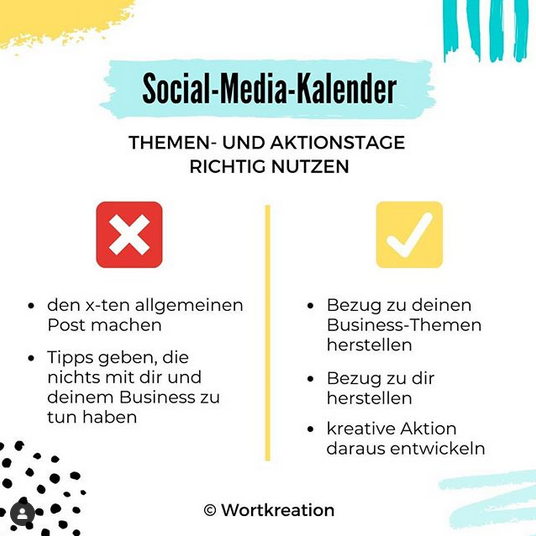
Take a look at your competitors: What works well for them and what doesn't? You shouldn't copy their ideas exactly, but general competitor research can be invaluable. If you have the same target audience, you can look at the comments on posts to see how people reacted.
Thematically, you can start by looking at the content you already have. Do you have a company blog? Great! You can turn existing articles into bite-sized pieces to share on social media. A single blog article can quickly be turned into 5-10 posts.
Not a social media guru? Then you should research what your chosen channels are actually suitable for. Twitter works fundamentally differently to Instagram, and the relatively new TikTok is a medium in its own right. Some channels require short, concise statements à la microblogging, others require high-quality photos, and still others require entire videos.
{{divider}}
Step 3: Plan your content
The next step is to use the collection of ideas you have gathered through your research to create a plan. This will be your editorial plan for social media. If your company has an editorial plan for other content and the goals and target groups overlap, you should align both plans with each other.
Otherwise, it's best to plan a story or customer journey along which you can share your content. Longer-term content that builds on each other can be interesting and keep your followers engaged for longer. But keep in mind the fast pace of social media. If the format drags on, your followers' patience may wear thin.


However, your editorial plan should not only be broadly focused in terms of content, but also specific: What content will be published on which day, at what time, and on which channel? Almost every social media platform rewards regular posting with higher visibility for your content. It also helps you stay present in the minds of your target audience.
If your content involves complex formats, your planning can be even more detailed. For example, if you are shooting a video for YouTube, you can note down where it will be recorded and what props are needed. The better you plan, the easier it will be to create your content!
{{divider}}
Step 4: Create your social media content
First things first: don't wait until the day of publication to create your content. Too much can go wrong or be forgotten at short notice, and the lack of time will be reflected in the quality of your content. Apart from a few minor details, your content should be ready in advance so that all that's left to do on the big day is publish it.
Content for Twitter is likely to require the least preparation: you write a text of the specified length and add links or hashtags. If a tweet isn't long enough, you start a thread. If you want to insert a link or photo, don't forget to do so.
Follow-up:
- All-inclusive package ✖️
- All-inclusive package ✅#Spelling tip #ForReasons
— TextSketches (@TextSketches) February 18, 2020
Instagram is more complex. Users expect high-quality photos. You can't take those with an old smartphone. You need a good camera, decent lighting, appealing image composition, and a consistent visual style. If you use filters, use the same ones every time.
But video content also requires complex production: different formats are needed for different social media channels. Videos for Instagram Stories should be planned in 15-second snippets, while there are few restrictions for Facebook. If the video is to be published on YouTube, you need an intro and a thumbnail.
Check out this post on Instagram
A post shared by Insider Tips & Workshops (@blumenkind_design) on Oct 24, 2019 at 1:49 PDT
A little tip: use the batching method. This means that you carry out one task at a time. Instead of taking and editing a photo every other day, you organize a photo shoot at regular intervals. This will result in a large number of photos. On another day, you edit all the photos. Or you can record three videos in one day and edit them on another. This saves time because you don't have to constantly switch between tasks.
{{divider}}
Step 5: Share your content on social media
Your content is pre-produced, and the editorial plan specifies what should be published today and where. Now you just have to take the final step. If you use planning apps such as Planoly, distribution happens automatically or at the touch of a button. That's it—job done, right? Well, yes and no.

You can simply publish your content and then ignore it, but that only makes sense to a limited extent. Social media is called social media because it has a social component. You have to interact with your community. Respond to comments, like retweets, be active. Instagram doesn't like it when you just post but don't interact.
{{divider}}
Step 6: Analyze your content
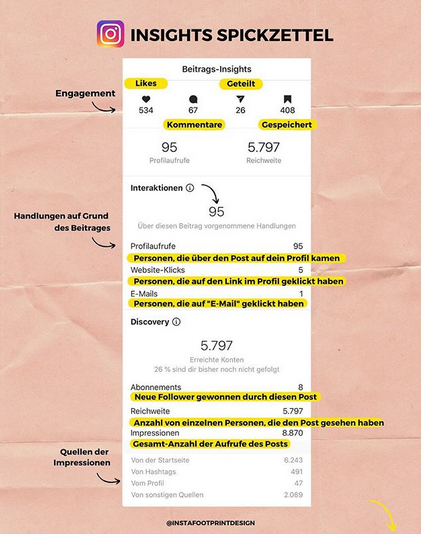
After a while, you will notice that some content works better than others. Instead of making assumptions and wondering why this might be, you should carry out an analysis. Use both the insights from your social media channels and the KPIs from your SMART goal as a guide.
If your content has not achieved your intended goal, it does not necessarily mean that it is poor. It could be something trivial, such as your target audience being online at a different time than when your posts are published. Are you using the wrong hashtags?
Review your content and check it: Is the quality right? Have you chosen the right social media channel? Are you addressing your target audience correctly? Is your content appealing? It's best to get feedback—from colleagues, but also from your followers. A good community will tell you what they want to see.
{{divider}}
Step 7: The cycle starts again from the beginning
Now that you know what works and what doesn't thanks to your analysis, you need to adjust your social media content strategy. Discard formats that don't go down well, post more of what contributes to your SMART goal, and increase the quality of your content.
You can also feel free to experiment. Test whether it makes sense to post on a different day or at a different time. Try out different hashtags. Play around with the features that each medium offers. Change the structure of your texts or revise your graphics. What works can stay. Everything else can be adjusted or discarded.